

Air Date: 5 October 2023 to 9 November 2023
Network: Disney+
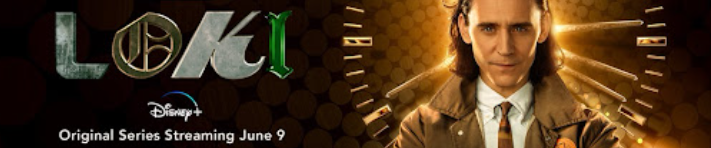
Stars: Tom Hiddleston, Owen Wilson, Sophia Di Martino, Ke Huy Quan, Wunmi Mosaku, and Jonathan Majors
The Background:
While Marvel Studios expanded into television ventures with the likes of Agents of S.H.I.E.L.D. (2013 to 2020) and various Netflix productions, the launch of streaming service Disney+ led to MCU godfather Kevin Feige producing various content to further explore the continuity of the MCU. Although Marvel Studios somewhat flooded the market with shows and movies, the first season of Loki (Herron, 2021) was met with critical acclaim for its characterisations and unique narrative. Since Tom Hiddleston’s portrayal of Norse God of Mischief Loki Laufeyson has been consistently popular over the years, a second season was all-but inevitable, especially considering the first ended on a massive cliff-hanger. Principal directors Justin Benson and Aaron Moorhead were excited to tackle the mischievous outcast and further explore Loki’s unlikely position as the saviour of the multiverse. While the writers strived to showcase new layers to Loki and the show’s returning characters, they faced an uphill battle in addressing lingering plot threads regarding Jonathan Majors’ multiple characters after he was accused of all kinds of wrongdoings and caused Feige to rejig the plans for Majors’ Kang the Conqueror. Still, the season aimed to dive deeper into the weirder side of the MCU while still focusing on character-driven stories, explore Loki’s emotional turmoil, and further set the stage for upcoming MCU projects. Released weekly on Disney+, Loki’s second season was widely praised for its bittersweet conclusion, the culmination of Loki’s selfless character arc, and the compelling performances.
The Plot:
Uncontrollably warping through time, an alternate version of Loki (Hiddleston) attempts to reunite with his female “time variant”, Sylvie Laufeydottir (Di Martino), and warn the Time Variance Authority (TVA) of the threat posed by variants of “He Who Remains” (Majors).
The Review:
If you’re anything like me and haven’t watched Loki’s first season since it originally aired, you’re in luck as season two opens with a helpful recap, largely narrated by the sentient artificial intelligence Miss Minutes (Tara Strong), that summarises the key events of the first season. Namely, the deceptive nature of the TVA (whose members are variants from destroyed (or “pruned”) timelines) who’ve had their memories continually wiped) and Loki and Sylvie’s climactic confrontation with He Who Remains. This saw Sylvie impulsively murder the enigmatic overseer, plunging the “Sacred Timeline” into chaos as the one coherent timeline diverged into an infinite number of strands. The first season saw this version of Loki, plucked from the peak of his villainous arc, transformed from a mischievous and self-centred antagonist into a reluctant hero, one who came to care for his allies at the TVA, particularly Mobius M. Mobius (Wilson). The first season concluded with Loki deposited in a version of the TVA where no one remembers him and a variant of He Who Remains is now immortalised as the founding father of the TVA. Since no one remembers him and Loki is renowned as a troublemaker, the TVA initially seeks to apprehend and prune him, forcing him to frantically flee through their offices since the time-displaced TVA has safeguards that negate his magic. As if this wasn’t bad enough, Loki finds himself painfully warping to different points in time where the TVA either remember him or don’t, something that should be impossible within the TVA but appears to be a result of one of the many temporal paradoxes and incursions peppering this season. Unfortunately, Loki’s “time slipping” is essentially resolved by the end of the first episode, “Ouroboros” (Benson and Moorhead, 2023), thanks to a time paradox Loki initiates that sees forgotten TVA technician Ouroboros/OB (Quan) cure Loki’s ailment using a “Temporal Aura Extractor”.
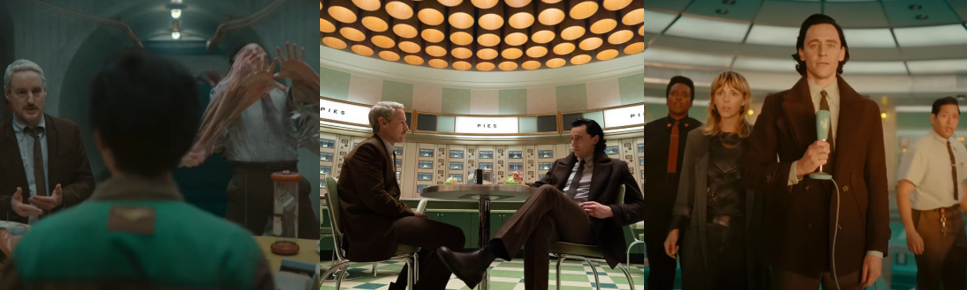
This desperate gamble, which sees Mobius brave a cosmic storm and approach the wildly unstable “Temporal Loom”, only succeeds because Mobius risks his life for his friend and Loki willing prunes himself from every timeline, stabilising his condition and allowing him to return to work alongside Mobius. However, Mobius is sceptical of Loki’s warnings about He Who Remains, an enigmatic variant whose death kick-started the catastrophe that threatens the TVA (and all reality) as he has a nigh-infinite army of variants waiting to wage war on time itself. Although Hunter B-15 (Mosaku) convinces the fractured TVA council (left in disarray after Ravonna Renslayer’s (Gugu Mbatha-Raw) betrayal) not to eradicate the branching timelines and thus sparing other variants of losing their worlds like they did, the TVA is largely unconvinced of the larger threat posed by He Who Remains, even after Loki dramatically reveals that he’s deceived them all. While dealing with He Who Remains is Loki’s top priority, he’s also desperate the safeguard Sylvie from the warmongering General Dox (Kate Dickie) and her chief agent, Hunter X-5 (Rafael Casal), who dismiss Hunter B-15’s arguments and launch a devastating attack on the splintering timeline before they’re apprehended. Distressed at the way their relationship fell apart over their disagreement concerning He Who Remains, Loki’s keen to make amends and recruit Sylvie to his cause, only to find her bitter at the TVA, angry at his loyalty to the organisation, and content to live a mundane life as a McDonald’s employee. This season really showcases how much Loki has changed as he’s extremely loyal to Mobius, makes fast friends with OB, and sees that the TVA saves more lives than it ends and is a necessary function to defend against He Who Remains. While interrogating Hunter X-5 (who abandons his mission to become successful actor “Brad Wolfe”), Loki takes the high ground when his moral stance is questioned and even councils Mobius when he lets Brad get under his skin, having learned to empathise with others and prioritise saving lives over taking them.
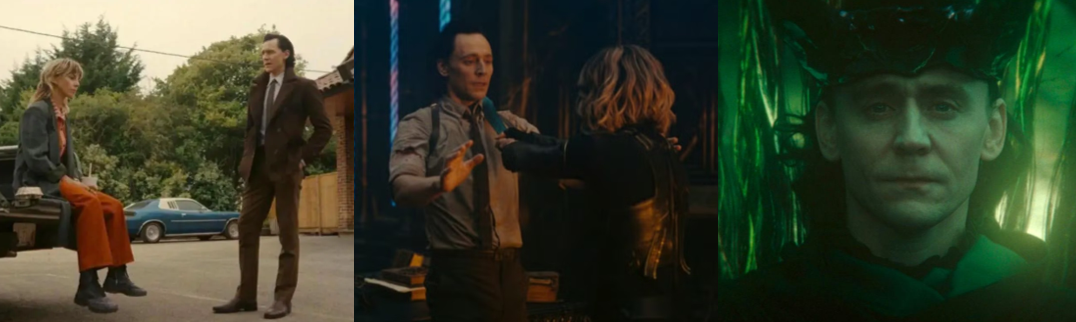
While Loki’s still mischievous at times, using his powers of illusion to subdue Brad and then colluding with Mobius to threaten Brad into giving up Sylvie’s location, he demonstrates incredible patience, enduring Mobius’s more relaxed approach to field work, OB’s eccentricities, and Sylvie’s pig-headedness all to try and reason with them. When the likes of Brad and Renslayer call out Loki’s hypocrisy, he admits to having done bad things and experienced jealousy and rage in the past but is seemingly committed to doing good now. However, during his desperate attempt to time slip back to the TVA and prevent the Temporal Loom from exploding, Sylvie forces Loki to admit that, deep down, he’s motivated by a selfish desire to not be alone, leading him to briefly abandon his cause. Loki’s despair at his friends forgetting him and his desperate needs to assemble their variants in “Science/Fiction” (Benson and Moorhead, 2023) is palpable, with him being both frustrated and hurt when they forget him and enduring centuries of time slipping to try and save them all. When his efforts are doomed to fail, a chance comment by Sylvie sees Loki return to the citadel at the End of Time to endure another doomed time loop as Sylvie’s past self refuses to listen to reason and he cannot bring himself to kill her. Ultimately, Loki’s given the same choice as in season one: maintain the Sacred Timeline or risk total annihilation. While Sylvie advocates for free will, even if it means everyone dying, Mobius relates the burden of making sacrifices for the greater good. Thus, rather than risk his friends, Loki destroys the Temporal Loom and rearranges the disparate timelines into something more stable, a tree-like structure resembling Yggdrasil, with himself at the centre. While he previously admitted his fear of being alone, Loki gratefully assumes his duties with a content smile, having finally found his place as a more benevolent overseer of the many timelines.
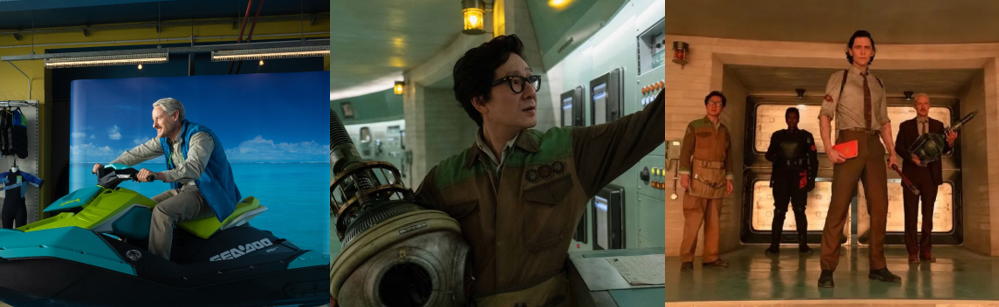
While Mobius initially has no idea who Loki is, his memories quickly return in fragments and he’s soon following his instincts and bringing Loki to OB and risking having his skin peeled off by the Temporal Loom to help his friend. Though still distracted by jet skis, we get a few extra layers to Mobius this season as he adamantly refuses to peek into the many timelines and see the life he was denied by He Who Remains, being content with his job and enjoying it. However, after Loki encounters Mobius’s jet ski salesman variant, Brad, a single dad who’s awestruck that he’s essential to saving reality, Mobius eventually decides to take a break from the TVA. After plunging the Sacred Timeline into chaos, Sylvie retreats to 1982 and lives a content, if mundane, life as a McDonald’s employee. Adamant that she can handle any variants of He Who Remains, Sylvie angrily refuses to help Loki or the TVA, believing that free will is more important than anything. While Sylvie begrudgingly aids Loki despite this, she’s forced to join his group when her beloved timeline is spaghettified by the exploding Temporal Loom, yet still believes she was right to kill He Who Remains. Loki’s also aided by Casey (Eugene Cordero), a technician who helps Loki and Mobius track their targets, Hunter B-15 (who’s determined to stop haphazardly pruning timelines and thus horrified when Renslayer murders General Dox and her followers), and newcomer OB. An enthusiastic and quirky technician, OB wrote the TVA guidebook after being inspired by Victor Timely (Majors), who was in turn inspired by the same guidebook after being gifted it by Renslayer to turn him into He Who Remains, creating a paradox. Even OB’s unsuccessful sci-fi writer variant Doctor A.D. Doug is instrumental in helping Loki by cobbling together a crude TemPad and helping him master his time slipping. OB also spends what’s said to be centuries working with Timely to teach Loki about particle physics. Though this plan ultimately fails no matter how hard or fast Loki tries to utilise the “Throughput Multiplier” as the Temporal Loom is incapable of handling infinite timelines, the influence of Loki’s friends has a profound impact on him and he willingly gives up his personal freedom to safeguard their lives.
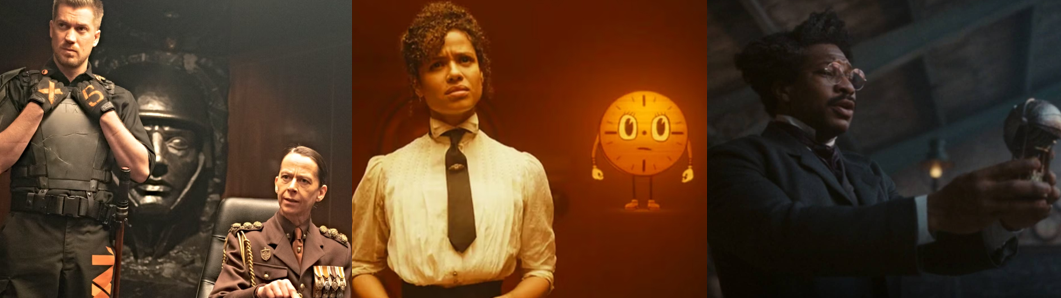
While Loki is terrified of the imminent danger posed by the variants of He Who Remains, they’re a very vague and ominous existential threat, one not seen in this season. Thus, the danger posed by the stubborn General Dox initially takes priority. Although Loki and Mobius apprehend Dox and her loyalists after working over Brad, they’re too late to stop her destroying most of the timelines. Encouraged by Judge Gamble (Liz Carr), Hunter B-15 attempts to find common ground with General Dox to safeguard the TVA, only for her and her loyalists to be gruesomely executed by Renslayer for refusing to join her. Brad does join Renslayer and Miss Minutes but immediately regrets it and ultimately turns on her soon after, finally feeling remorse after spending the entire season being a complete asshat. Renslayer forms a shaky alliance with Miss Minutes, hopping to 1893 to try and coerce Timely into joining with them, only for the eccentric Timely to ditch them since he’s so against a partnership and rightfully horrified when Miss Minutes reveals she’s in love with his counterpart. Spurned by Timely’s refusal and him choosing to assist Loki, Renslayer and Miss Minutes renounce He Who Remains, especially after Renslayer learns that she was once his commander and was discarded by him, to wage their own campaign against the TVA. Loki’s horrified upon seeing Timely, who shares the same visage as He Who Remains, and at the stuttering con artist’s potential to become He Who Remains, but soon defends the bumbling scientist and even respects him for braving the cosmic storm. Though a con man, Timely has a grand imagination and, inspired by the TVA guidebook, has the potential to become what Loki and Sylvie fear most. Ultimately, even Sylvie recognises that Timely isn’t the same man and he proves he’s committed to doing the right thing, even if it costs him his life. When trying to prevent the destruction of all reality, Loki confronts He Who Remains again, learning that he perfectly planned for all eventualities and that the risk of multiversal war remains as strong as ever. However, Loki’s sheer determination to find another way and ensure everyone gets the chance to thrive wins out, with the reorganised TVA shown to be actively hunting the variants of He Who Remains and presumably ending whatever threat they pose to the MCU.
The Summary:
Loki’s second season picks up right where the first one ended but presents a narrative under constant pressure from a few existential threats. Obviously, the danger posed by the unseen variants of He Who Remains is most pressing, and one Loki is eager to guard against, but it’s largely a non-factor here, especially compared to the imminent danger posed by the Temporal Loom. I initially believed season two who revolve around Loki’s sporadic time slipping but this is sadly cured by the end of the first episode. It does make a dramatic return by the finale, “Glorious Purpose” (Benson and Moorhead, 2023), to depict Loki repeating the same loop over and over for centuries, desperately trying to speed up OB’s plan and failing each time. While this is a great way to emphasise Loki’s newfound sense of devotion to his friends and commitment to saving countless lives, it is strange that he didn’t think to time slip further back sooner. There are some fun paradoxes in this season due to this mechanic, though, with Loki jumping to the future, where the TVA is moments from destruction, encountering himself at different times throughout the season, and quickly building a friendship with OB by consulting with him in the past and those memories aiding Loki and Mobius in the present. Unfortunately, this gimmick isn’t sustained throughout the season and, despite many characters glancing at their alternative timelines, we don’t explore many variant realities here. Loki spends all of “Science/Fiction” in one, only for his primary plan to fail and for desperation to drive him to reliving the same moments, kind of making this episode a waste even if it does finally give us the imagery of Owen Wilson on a jet ski.
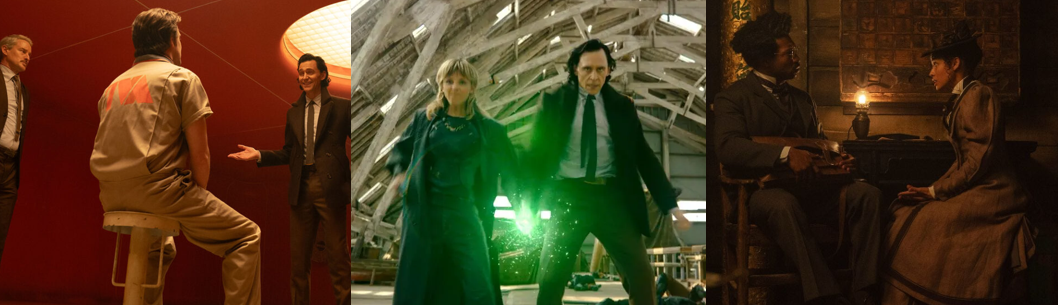
The performances were as captivating as ever in this season. I particularly liked the friendship between Loki and Mobius, with Loki insisting on sitting his friend down and discussing his feelings over a slice of pie, being exasperated by his more cerebral approach in the field, and bickering about which of them should brave the cosmic storm and install the Throughput Multiplier. Mobius is explored a little more here, determined not to look into his other timelines out of fear that they will be better or worse than the life he’s devoted himself to, and Loki shows genuine affection towards him to show how far he’s progressed as a character. This extends to the standout character of the series, OB, whose infectious demeanour steals every scene and quickly makes him an ally Loki fights to protect. Sylvie is very different this time around, being somewhat jaded and content to lay down her arms unless challenged. She opposes Loki’s moral high ground and offers an extreme perspective on events but is ultimately an advocate for free will and willing to make any sacrifice to ensure people have that right. If there’s a weak link here, it’s Jonathan Majors, whose oddball, stuttering, bungling Timely really drags down every scene he’s in. I liked that he was a conman who sold faulty inventions and that he constantly switched his allegiance depending on what was best for him, but his eccentric personality and overly theatrical delivery quickly became grating. He does surprisingly showcase a great deal of bravery and fortitude, however, even earning Loki’s respect when he risks his life to save reality and ultimately chooses to take a different path to avoid becoming He Who Remains. Although Renslayer is more of a bit part this time, I liked how bitter and twisted she was and the rivalry between her and Miss Minutes, who both vie for Timely’s affections. I would’ve preferred Renslayer to play a larger role as a dual antagonist alongside Miss Minutes, perhaps with them replacing Brad in some way, as she felt like an afterthought by the end.
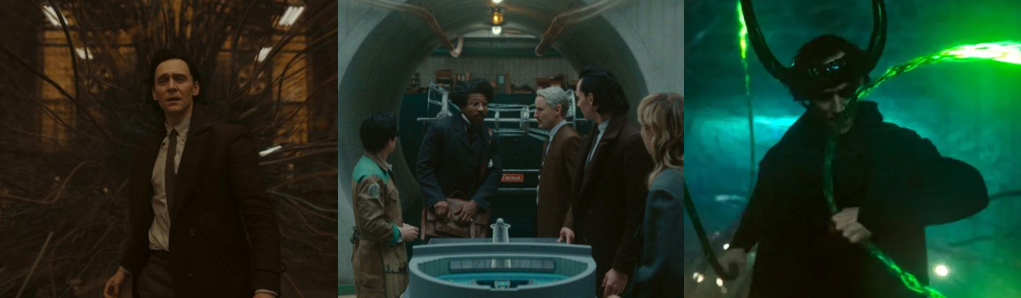
While Loki’s second season certainly looks the part and delivers some stirring character moments from the title character, who finally fulfils his “glorious purpose” and finds his place in reality, I did find it lacking. The entire season is essentially a do-over of the first season’s finale, with it all boiling down to the same choice between killing He Who Remains and risking war or maintaining the lie/sanctity of the Sacred Timeline. As Loki effectively ends up taking the place of He Who Remains and overseeing the newly formed timelines, I can’t help but feel like the show could’ve been reorganised to take the best episodes and ideas and present them as a ten-episode series that makes the same point. I was hoping this season would be about an unstable, time slipping Loki bouncing around the infinite multiverse encountering variants of He Who Remains and trying to prevent his creation. Instead, it was largely a race against time to find ways to repair and stabilise the Temporal Loom, with each approach failing because Loki is seemingly doomed to fail, especially at being anything but a villain. These aspects are where Loki shined the most, the ways it presented new aspects of Loki’s personality. I loved how he encouraged Brad’s criticism and seemingly veered towards his villainous ways when interrogating him, and that Loki constantly takes a higher path, offering support to his friends when they lose control and constantly trying to empathise with others. This season is, however, let down somewhat by the lack of variety in the time periods visited, with most of the action happening in the increasingly chaotic TVA, and failing to explore the multiverse as widely as I’d hoped. As a character-driven season, it’s pretty fascinating, but many of the narrative beats are recycled from the last season. Loki’s encounter with He Who Remains isn’t that much different to last time and, while its bittersweet to see Loki replace He Who Remains, it feels like all this madness could’ve been avoided if he’d just done that in the last season. Still, season two did a good job tying up some loose ends and giving many of these characters a satisfying send off, I just think it had the potential to be even better.
My Rating:
Pretty Good
Did you enjoy the second season of Loki? Were you happy to see Loki evolve into a more heroic and balanced character? Did you also enjoy the friendship he shared with the likes of Mobius and OB? Were you also disappointed that the time slipping aspect was downplayed? Did Victor Timely also annoy you and what was your reaction when Loki finally took the place of He Who Remains? Drop your thoughts on Loki below, check out my other Asgard-adjacent content, and donate to my Ko-Fi to fund more reviews like this.

 Dr. K's Waiting Room
2 thoughts on “Screen Time: Loki (Season Two)”