

Air Date: 18 May 2009 to 24 June 2009
Directors: Tor Helmstein and Ian Kirby
Network: Machinima
Stars: Moon Bloodgood, Cam Clarke, and Jim Meskimen
The Background:
Although The Terminator (Cameron, 1984) was an unexpected financial success, Terminator 2: Judgment Day (ibid, 1991) was a blockbuster release that is widely regarded as one of the greatest movie sequels ever made, something no-one was saying about its ill-advised follow-up, Terminator 3: Rise of the Machines (Mostow 2003). Somehow, though, Terminator 3 did surprisingly well at the box office and eventually led to the sadly critical and financial disappointment that nevertheless remains one of my favourites in the franchise, Terminator Salvation (McG, 2009). Terminator Salvation was accompanied by a videogame tie-in that garnered mixed reviews but also provided the tools to produce a prequel miniseries using the game’s in-game assets and engine. Terminator Salvation: The Machinima Series was comprised of six episodes running around fifteen minutes each and was aired on Machinimia, a now-defunct web-based video platform known for their adaptations of videogame properties. The series was met with mixed reviews; some praised the expansion of the film and game world through the new format, while others criticised the lacklustre presentation of the miniseries. Ultimately, it wasn’t enough to keep the Terminator franchise from entering into legal issues and Terminator Salvation: The Machinima Series is now an often forgotten footnote in the long and complicated history of the science-fiction franchise.
The Plot:
Set in 2016, years after Judgment Day, Blair Williams (Bloodgood) fights the war against the machines in downtown Los Angeles by tracking down computer hacker Laz Howard (Clarke) to persuade him to join the Resistance.
The Review:
Terminator Salvation: The Machinima Series uses the in-game graphics and assets from the Terminator Salvation videogame, meaning the environments (while a little bland and stale) are serviceable, for the most part, and reflective of the bleak, war-torn world seen in the movie. However, while the machines look pretty impressive, the character models are disturbingly devoid of human emotion in the face. They move okay when in action, it’s just when they stand around or shots linger on facial expressions that they fail to hold up against other CGI movies. The graphics engine used to render the effects also makes them appear a bit like emotionless puppets than anything else (Laz is the most obvious offender in this regard), but at least Moon Bloodgood returned to provide her voice even if her model doesn’t properly capture her natural appearance. Accordingly, the miniseries is blatantly geared towards selling the videogame; action sequences pitting the Resistance against the Spiders not only reflect the in-game action, but they actually are the in-game actions! Blair and other characters sneak from cover to cover, fire blindly from behind dilapidated walls, target the Spiders’ power cell on their back, and take the high ground to get better shots. The miniseries also incorporates the rail-shooting sections form the game, with Blair and Laz fighting back pursuing Moto-Terminators on a half-wrecked train while shooting rocket launchers and blasting at airborne Terminators while racing along in a truck, and it appears that all the locations are ripped wholesale from the videogame, including background elements like burning aeroplanes, wrecked buildings, and destroyed highways. While the voice acting is pretty good, for the most part, and tells a story of trust, desperation, and fraying humanity against the backdrop of widespread nuclear devastation and never-ending conflict, the lip synch is dreadful because the character models weren’t built for this level of emotion.

Blair narrates each episode and takes centre stage; her dreams are haunted not just by memories of life before Judgment Day, but also a time when she hesitated to fire upon a HK while flying a Resistance fighter jet and caused the death of her wingman. After years of fighting alone (or alongside veritable strangers) with no clear perception of who or what she was fighting for beyond basic survival, she’s come to see that the only way to win the war against the machines is for humanity to unite with that singular purpose. While this means she spends a lot of her time pinned down and taking cover from relentless fire from the T-7-T “Spider” machines like in the Terminator Salvation videogame, she at least has allies to watch her back and provide cover fire, though the sheer amount of death and destruction that surrounds her at every turn has left Blair feeling somewhat jaded. Blair runs down the devastation caused by Judgment Day that’s left the few survivors desperately fighting tooth and nail against not just a ruthless and inexhaustible enemy but the fear of all-out extinction. Before she learned to work alongside others, Blair (who claims to be numb to fear) was the perfect choice for dangerous, even suicidal, solo missions like searching through the ruins of Los Angeles for a “ghost” that’s been disrupting the Resistance’s communication lines. During this mission, she had her first face-to-face encounter with a chaingun-wielding T600! Although her grenades proved ineffectual, Blair successfully evades the machine and destroys a troop of Spiders, only to find that the “ghost” is disillusioned Laz Howard, a hacker capable not only of disrupting their communications but also reprogramming the machines (to a limited degree). Determined to keep him from interfering with their operation, and seeing his potential, Blair protects him from the machine counterattack so that he can be brought to her superiors. Following a train crash, Blair and Laz are pursued by the Terminator (accompanied by a remixed version of the T-1000 theme) and, without his equipment, Laz first cowers behind cover as Blair briefly disables the machine then getts into a philosophical debate with her.
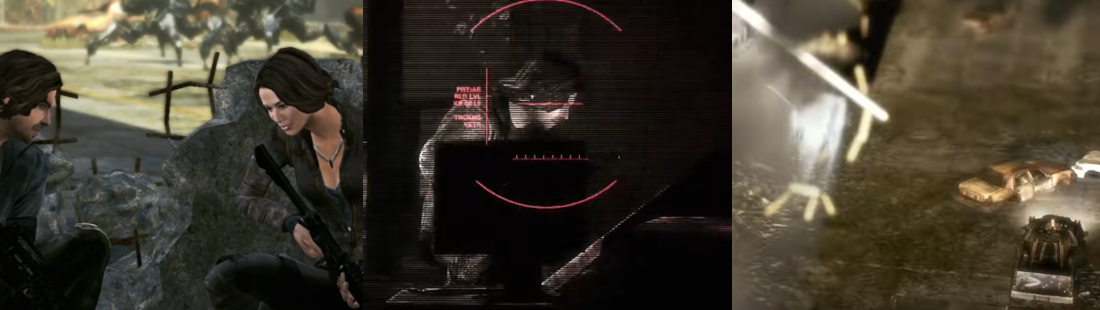
Blair despises Laz’s actions and the lives he’s cost with his interference, while Laz argues that he’s just trying to survive and never meant for his algorithm to harm others, and also that he’s more in touch with humanity than Blair since he’s not blindly following orders or threatening others with guns. Their argument attracts a Spider and Blair debates leaving him to the machines since her mission was to eliminate the “ghost”, but she realises the value he could have and ultimately intervenes and resolves to protect him for as long as he can keep up with her in the ruins of the old world. While suffering from dehydration, Laz deliriously reveals that he disagrees with the Resistance’s aggressive methods against the machines since they never stop to learn how they work or how to exploit them, and that he resents the Resistance since he believes they’re as much to blame for the state of the world as the machines. Blair’s stunned when they reach the Resistance outpost and finds her comrades slaughtered by the machines as Skynet is actively trying to eliminate Laz to stop his disruptive algorithm. Blair cancels her evacuation request and mans a nearby turret when they’re attacked by Aerostats and T-600s and, though Laz disables and destroys them with his code so they can retreat, their escape is cut short by an airborne Hunter-Killer (HK). Forced to work together, Blair blasts the Aerostats using a mounted artillery gun as Laz speeds across a ruined highway, eventually forcing the HK to collide with solid concrete . Blair’s patience is tested by Laz’s anti-Resistance stance and his constant criticism; she bluntly tells him that he’s screwed either way since both sides want him dead. She convinces him to give the broad specs of his algorithm, which temporarily scrambles Skynet’s link to the machines (and, as an unfortunate by-product, disrupts Resistance communications) using radio frequencies. A T-600 records their conversation from afar and gets the jump on them, causing them to plummet into a sewer for a brief detour (and an awesome shot of the Terminator’s red eyes glaring at them, unnoticed, from the darkness), only for the T-600 to resume its attack once they emerge from the sewer drain.
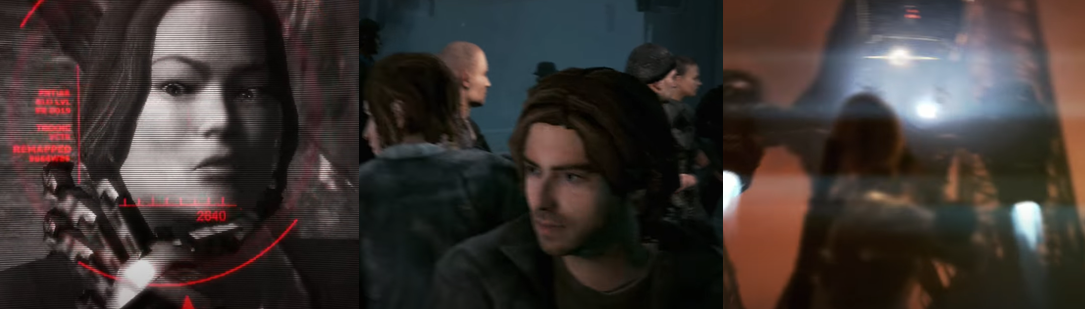
Rather than ripping Blair’s heart out or her head off, the Terminator is content to drag her by the neck as it pursues its primary target. This means Blair’s free to blast the machine point-blank in the head with her shotgun so they can beat a hasty retreat. However, Resistance command (Meskimen) refuses to evacuate Blair as long as the “ghost” is with her. Despite her vehemently advocating his right to life and protection, they insist that she get to the evacuation point alone, heavily implying that he be left behind or killed for “collaborating” with the machines. Despite this, Blair’s determined to bring him to them so he can share his knowledge, though she scolds him for taking her knife and continues to be aggravated by his cynical demeanour and refusal to trust her or the Resistance. When they’re pinned down by Spiders, Blair teaches Laz how to destroy them the old-fashioned way so he can be a little more useful in combat and he enjoys the triumph that comes from reducing the machines to scrap metal. Since Laz insists on having his own gear to broadcast his signal, Blair begrudgingly leads him to some suitable equipment under cover of darkness, which inevitably attracts the attention of more Aerostats and HKs. Once at the evacuation point, Blair lies about Laz’s identity so she can get him to safety but is separated from him when they’re attacked by machines. Overwhelmed, Laz is left alone, terrified, jumping at every shadow, and forced to hide from the machines; thanks to Blair’s teachings, Laz destroys a Spider and is taken in by some survivalists. Moved by their plight and Blair’s selfless attempt to protect him, Laz uses their radio equipment to broadcast his signal and shut down an attacking T-600, thereby making him a heroic figure amongst them. Blair tries to explain things to her commanding officer, and the potential benefits of Laz’s algorithm, but he refuses to risk lives extracting the hacker. Blair is aghast by her commander’s lack of humanity (she even echoes Laz’s sentiments about how “mechanical” the Resistance are) and disobeys his direct orders, leaving in a helicopter as the Resistance fighters deal with a machine incursion.
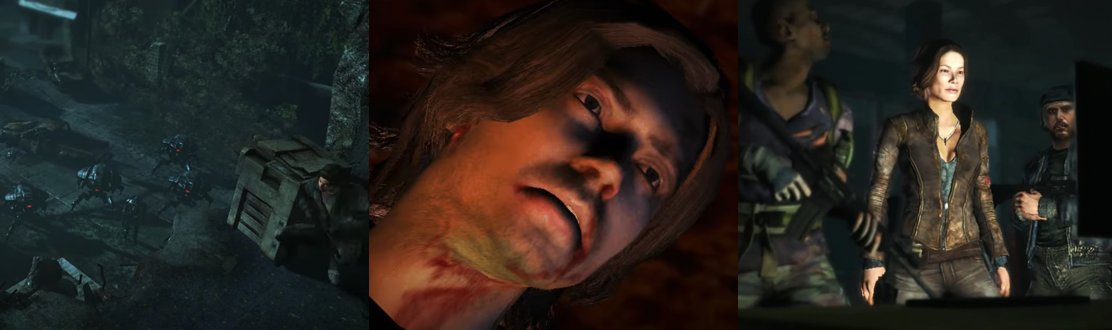
With HKs and other machines inbound, Blair orders her co-pilot to return to base and takes out another HK with a rocket launcher so she can search for Laz. She broadcasts Laz’s name and description to try and track him down and is pointed in the right direction, where she finds the remnants and survivors of the T-600 attack he helped to stop. Since the machines are continuing to hunt him down, Laz went out on his own to keep others safe. Luckily, Blair easily finds him right as another gaggle of killer robots closes in, though he’s traumatised by all the death that’s occurred because of his actions. Once again facing a swarm machines, Blair and Laz get some unexpected backup from the Resistance, which brings the miniseries full circle back to where it began, with them being pinned down by enemy fire. When a T-600 bursts through a wall and looms over Blair, Laz heroically throws himself in front of her and is summarily cut down by its gunfire. As he dies, he reveals that he left the key to activate his algorithm engraved on Blair’s beloved knife. Shaken by Laz’s death, Blair takes her emotions out on the half-crippled T-600 and the miniseries ends with Blair being promised that the disruptive signal will find its way to John Connor (who she hasn’t actually met yet at this point), and the revelation that Laz left behind a series of audio files. One is played to close out the episode that describes his first-hand experiences of Judgment Day and the abject terror he felt that drove him to dig in deep and stay in hiding. Galvanised by the experience, Blair resolves to continue on with the fight not just for herself, but for the countless other survivors out in the field and returns to her rightful place in the cockpit of a Resistance fighter jet to engage with Skynet’s forces once again.

The Summary:
I honestly didn’t really know what to expect from Terminator Salvation: The Machinima Series; I was vaguely aware of it as a CGI feature but had never really looked too deeply into it until now. It’s an interesting experiment, to be sure; it’s not often that a videogame’s in-game graphics and models are used in this way. Normally, tie-in material like this is a more traditionally-animated CGI affair and Terminator Salvation: The Machinima Series definitely does suffer somewhat by not utilising prerendered graphics on its presentation. While the locations reflect the bleak, desolate, war-torn ruins of the world seen in Terminator Salvation and are clearly ripped wholesale from the tie-in videogame, they’re not exactly diverse or visually interesting as characters stay in the same repetitive locations throughout the miniseries, with only the inky darkness of night and some dilapidated interiors mixing things up. It’s fun seeing characters perform actions from the videogame like sliding into cover, firing blindly at enemies, and using heavy weapons while speeding along in vehicles but it basically amounts to a lengthy advertisement for the game, more than anything. In that respect, I find it odd that Terminator Salvation: The Machinima Series wasn’t included as a bonus feature in the videogame since it basically acts as a prelude to that game and as a showcase of the in-game action offered by it, including sneaking around the Spiders, desperately fending off relentless T-600s, and blasting at aerial machines with projectiles zipping all over the place.
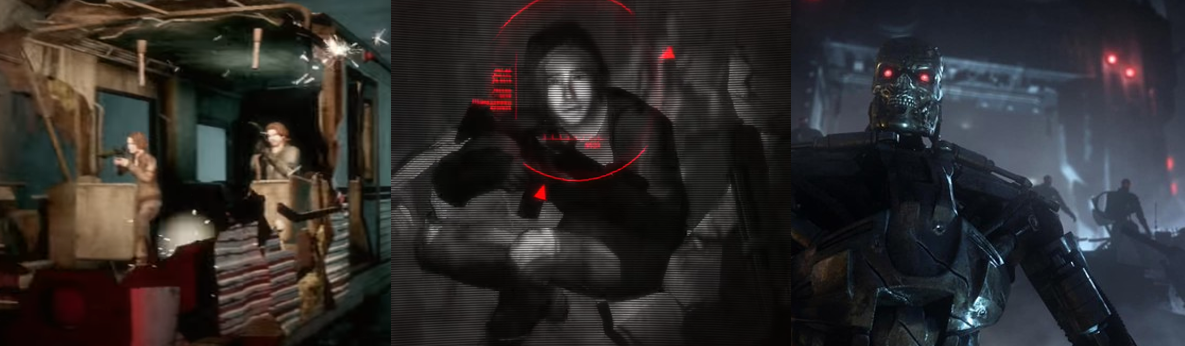
Where Terminator Salvation: The Machinima Series does impress, though, is in the story and the quality of the voice acting; Moon Bloodgood is ironically better than in the movie, adding some real depth to her sadly one-note character by exploring how the war has affected her humanity and her relationships towards others. Her narration paints a picture of a world on the razor’s edge of all-out insanity. Fear and tension run rampant throughout the Resistance, which has grown increasingly cold and battle-hardened by the ever-escalating conflict, to the point where Laz point-bank refuses to help them and criticises them for being no better than the machines. At first, Blair opposes this perspective and sees Laz as little more than a lowly “collaborator” who might have some value to the Resistance, but he comes to see Laz’s opinions aren’t entirely invalid when her superior would rather let Laz die than risk extracting him, not matter how important he might be. Laz represents the everyday folk struggling to survive in the ruins of society, an embittered people who just don’t have the strength to fight back and resent the Resistance for bringing more destruction to an already ravaged world. He’s just trying to use the skills he has to survive and wants no part of the conflict, but comes to see that humanity’s only chance at surviving is to work together, which ultimately leads to him sacrificing his life to save Blair and handing over the key to his machine-disrupting algorithm. Interestingly, however, this signal isn’t the same one seen in Terminator Salvation, which was a trick created by Skynet to lure the Resistance into a trap, which muddies the waters a little in terms of continuity, though the miniseries did a decent job of adding a little more context to this world. Ultimately, it was an interesting extended cutscene and advertisement for the Terminator Salvation videogame. I think it might’ve had more potential as a proper CGI feature but I’m surprised we didn’t see more projects like this back in the day, or even now, as it seems like an easy way to produce some tie-in material. Sadly, Terminator Salvation: The Machinima Series comes across as “cheap” all too often, making it a largely forgettable experience that, as I said, probably would’ve been better as a shorter, simpler bonus feature included on the game disc.
My Rating:
Could Be Better
Have you ever seen Terminator Salvation: The Machinima Series? If so, what did you think to it and did it help sell you on the tie-in videogame? What did you think to the story and the expansion of Blair’s character? Did the miniseries get a bit repetitive for you considering its short runtime? What do you think to the recycling of the videogame’s assets and would you like to see a proper CGI Terminator feature? Were you a fan of Terminator Salvation? How are you celebrating Judgment Day today? No matter what you think about Terminator Salvation, and the Terminator franchise, feel free to leave a reply down below or drop a comment on my social media and check out my other Terminator reviews.

 Dr. K's Waiting Room
2 thoughts on “Screen Time: Terminator Salvation: The Machinima Series”